
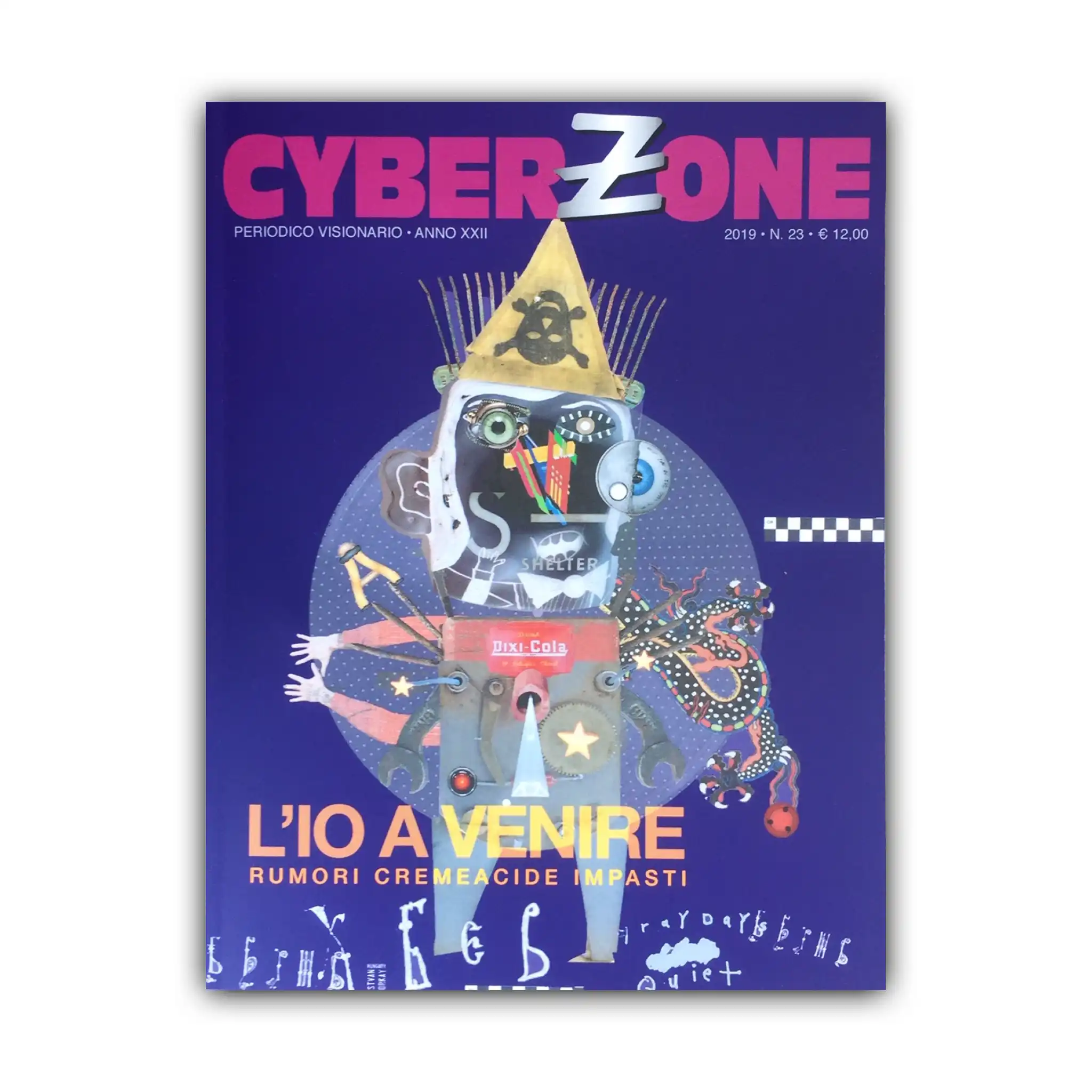
Cyberzone No.23
12,00 €
Availability: Available
Cyberzone No.23
A visionary full-color periodical with texts in Italian and English.
No. 23 – May 2019.
Bisso Edizioni – Palermo.
The greatest philosophers of imagination and the most visionary artists on the planet reflect on humanity’s future.
Thirty years ago, the Berlin Wall fell. Meanwhile, other walls have been built. The preference for walls—racial, social, economic, cultural—is the passion of those preaching profit and plunder, who bestow honors on the rich and deathly credit on the poor. Indeed, it was a former CEO of a global financial giant—Google—who cynically reminded us:
“Proud of our system... We have no intention of paying more taxes. It’s called capitalism. We are proudly capitalists. I have no doubt about that.” He continued: “We exploited all the incentives governments offered us.”
This, in brief, is the global scenario in which Cyberzone rises again. It’s not a great time to be born after a long pause. From its first appearance in 1996, Cyberzone spoke the language of heretics. It will continue to do so (also with English translation) by monitoring the recent changes in creative and antagonist thought practices.
This issue reaffirms a premise that has marked the magazine’s life: imagination is the site of multiple, fragmented, and contradictory positions and compositions of the individual in relation to the indistinct social magma. In this sense, Cyberzone holds a firm idea: low fidelity. Spurious materials, alien to the institutional frameworks of the art system, combined with theoretical irreverence, authors and texts of free, undisciplined, anti-academic thought, along with critical interventions on the present, will shape its path.
This issue reads like a large syncopated sentence. If the articles share something in common, it is a curious strategy of subtraction. This planet suffers from the impulse toward “too much” and the saturation of every living space: material obesity—the cynical mirror of hyper-consumption—affects individuals to the point of creating strange forms of life and appearance, like the cyclops on the cover by great Hungarian artist István Horkay, whose body rebels against excess and transforms, pataphysically, into a new post-human being: the coming self is one of catastrophe, not crisis.
In other words, the articles do not “add” anything; they have no new message to say—the market of meaning is saturated.
The coming self is without a homeland, without borders, fragmented: a king (capital and narcissism) devouring itself (Jappe); Alzheimer’s disease afflicting the avant-garde (Macaluso); the fetishism of meaning cultivated by the reactionary category of the respectable (Maffesoli); survival forms against the metastasis of “development” and its social drifts (Latouche); the void as a device against substantialism and identity (Faletra); experimental practices of transitory ontology (Pedretta); minimal strategies of self-governance (Scardovelli); Bavari’s post-static subject screen; Pistola’s anarchic graphics; Lillard’s seductive attempts to tear the same from itself; Di Grado’s post-pataphysical collages.
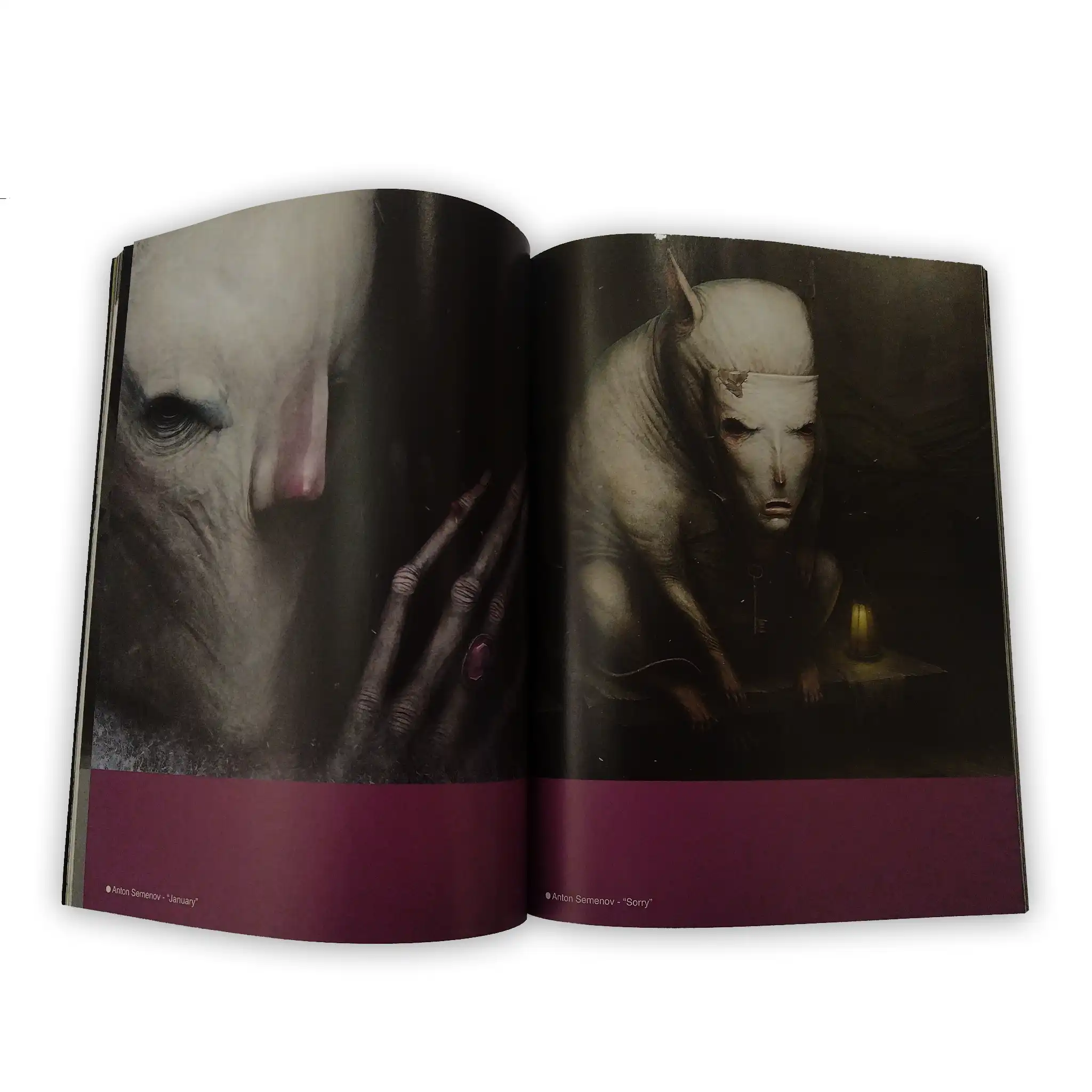
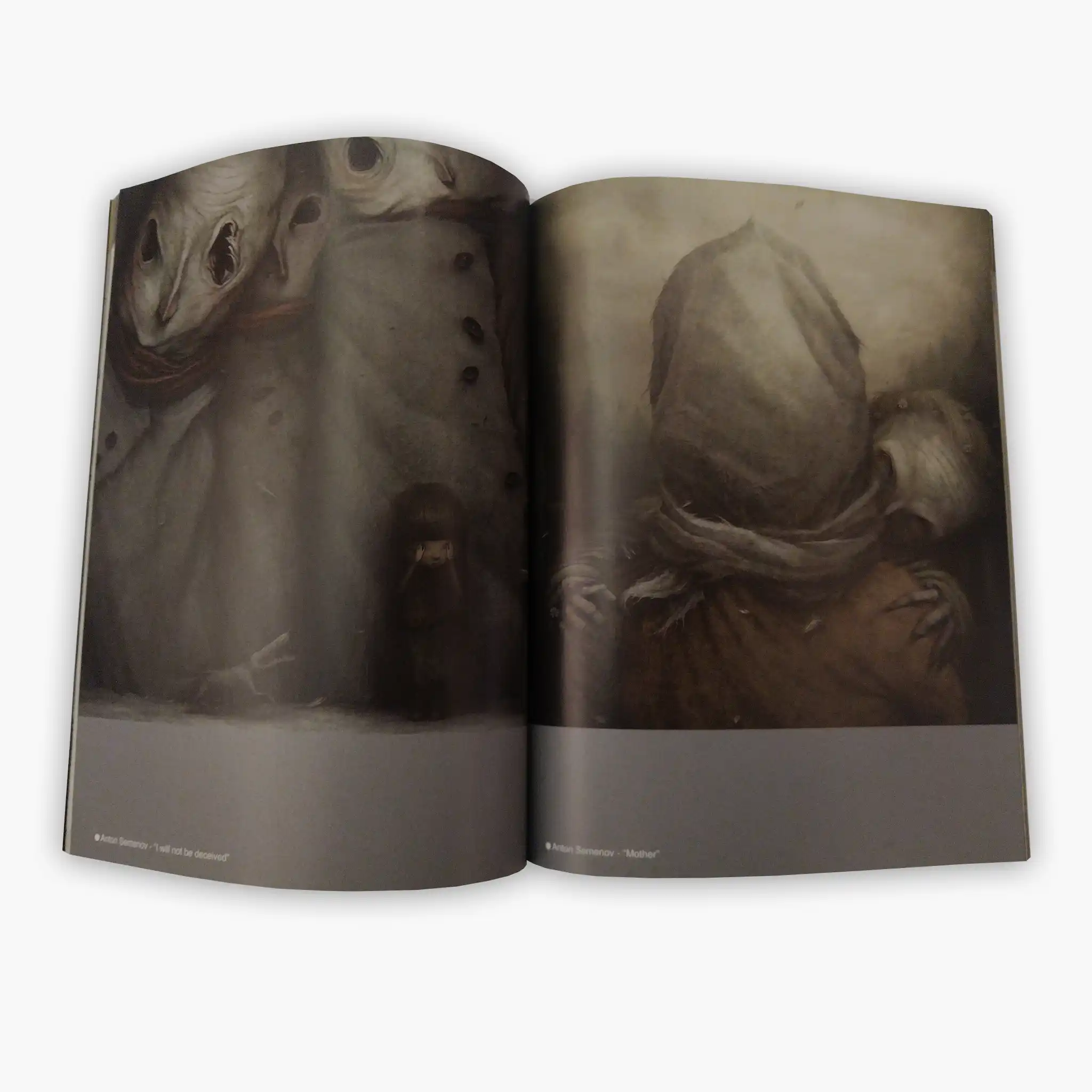
The coming self is also the ambush of metamorphic disorder at the heart of subjectivities, as seen in Semenov’s images, presented here in a world exclusive by Cyberzone. Here, the coming self is a dramaturgy using experimental masks projected in an orgy of zoomorphic creatures.
This issue features an unpublished text by Paul Virilio, who passed away in September last year and was a collaborator in the magazine’s early days.
This rebirth of Cyberzone was made possible by a prime material: the courage of its patron, Dario Bisso. And courage, despite the times we live in, is in no hurry. It savors, face to face with the coming self, the fruits of its journey.
You May Also Like

10,00 €

15,00 €

15,00 €

25,00 €